
The Jewish Community Scholars Program began in 2001 in Orange County California to provide high level adult Jewish education. Technology has given CSP a global reach with partner synagogues in Israel, Europe and all of North America. As a partner synagogue, Temple Israel members have access to CJP’s vast array of live presentations from top notch scholars. CSP also has an extensive archive of past programs on You Tube.
 Sunday, October 5th from 10:00 a.m. – 11:00 a.m. (PT) and 1:00 p.m. – 2:00 p.m. (ET) live on Zoom from Israel
“Hinneni: Soldiers’ Poems for the Days of Awe” led by Dr. Rachel Korazim
Midst the holidays of Tishrei, a time of reflection, judgment, and renewal, we turn to voices that have emerged from the most difficult of days. The Hinneni collection gathers poems written by soldiers, both in regular and reserve duty, in the wake of October 7th. A joint project of Mashiv Haruach publishing house and the IDF Education and Youth Corps, the collection spans Israel’s diverse ideological landscape. Some poems may feel immediately familiar, while others challenge us to encounter perspectives beyond our own. Just as the High Holidays invite us to face ourselves and our community with honesty and courage, these poems open a raw and intimate window into the fractured, searching discourse of Israeli society today. CLICK HERE TO REGISTER.
 Thursday, October 9th, 23rd, & 30th from 12:30 p.m. – 1:30 p.m. (PT) and 3:30 p.m. – 4:30 p.m. (ET) live on Zoom from London
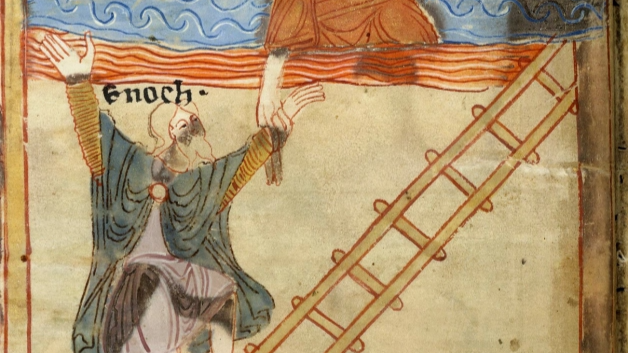
“Ben Sira, Enoch, and Jubilees: Jewish Texts at the Edge of the Canon” led by with Rabba Dr. Lindsey Taylor – Guthartz
In this three-part series, we’ll explore three ancient Jewish works that stood just outside the biblical canon yet shaped Jewish imagination for centuries.
Part 1 – Ben Sira: A 1,900-year-old book that almost, but didn’t quite, make it into the Bible, the Book of Ben Sira (also known as Ecclesiasticus) is full of moral advice, beautiful psalm-like passages, and some unfashionable views about women. We will look at its fascinating history and sample some of the text.
Part 2 – Enoch: Enoch only has a tiny part in the book of Bereshit, but his apparent failure to die inspired later Jews to fill in the rest of his story. We’re going to take a look at the First Book of Enoch, from the 3rd century BCE, which includes a tour of heaven, a universe bristling with angels, a solar calendar, and lots of apocalyptic stuff.
Part 3 – Jubilees: Back in the second century BCE, an adventurous Jew decided to rewrite the Bible … and produced the Book of Jubilees, a fascinating read with all sorts of secret information on the calendar, the early life of Abraham, and God’s plan for the Jewish people. CLICK HERE TO REGISTER.
 Sunday, October 12th from 10:00 a.m. – 11:00 a.m. (PT) and 1:00 p.m. – 2:00 p.m. (ET) live on Zoom from Jerusalem, Israel
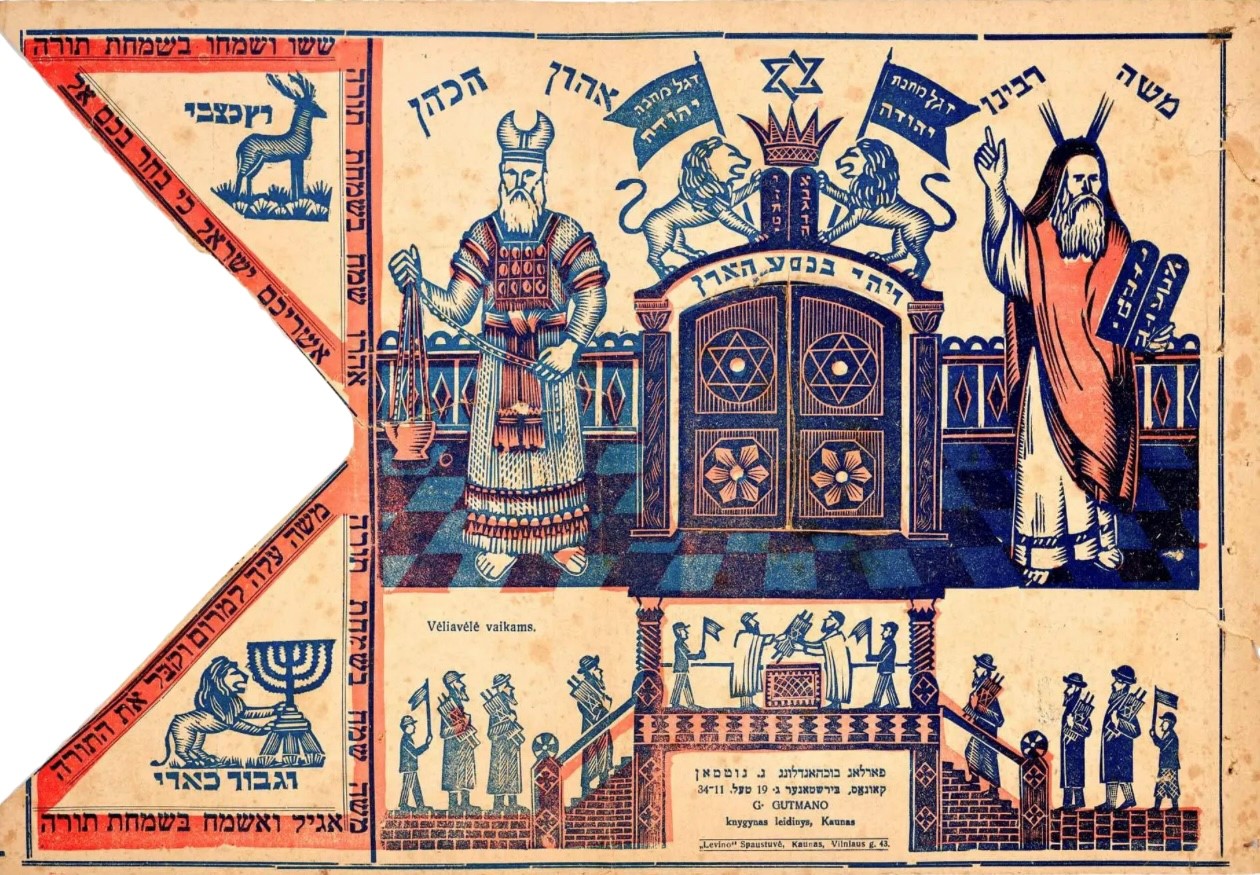
“The Simchat Torah Flag: From Biblical Roots to Modern Israeli Icon” led by Professor Shalom Sabar
Colorful, festive, and deeply symbolic, the Simchat Torah flag has long captured the imagination of Jewish children and communities. Although its material history extends only to the late 19th century, its conceptual roots lie in biblical and rabbinic traditions of the degel (“banner”) and degel Torah. This lecture traces how the flag became a miniature emblem of joy, devotion, and continuity—first in Ashkenazi communities, especially in Eastern Europe, later reshaped by Zionist imagery, and eventually reinterpreted in Israel and America. Its evolving iconography—from the emblems of the 12 Tribes, Torah scrolls, and the Ark flanked by Moses and Aaron, to Zionist leaders such as Herzl and Nordau, and even the victorious generals of the Six Day War—mirrors changing Jewish identities, hopes, and ideals. Today, contemporary designs reflect the diversity of Jewish life, ranging from ultra-Orthodox interpretations to politically correct, modern versions. CLICK HERE TO REGISTER.
CLICK HERE FOR MORE UPCOMING SESSIONS IN OCTOBER